Hundreds of Danish startups have for years been caught in a tax-related limbo. Now Danske Tech Startups is launching the campaign “Få nu skattekreditten fikset”, demanding that the Danish government fix the country’s tax credit scheme, skattekreditordningen, once and for all. As of the launch, over two years have passed since the political agreement to review the rules.
The scheme was designed to give startups liquidity for innovation by paying out the tax value of their research and development deficits, at a stage when they often spend heavily on development but have yet to win customers or revenue. But years ago, the Danish Tax Agency changed its practice for what counts as innovation, and since then Danish startups have lived with uncertainty and repayment claims. Software development is often not recognised as innovation, even though in practice it is, and cases are frequently assessed without the necessary technological insight, according to the campaign.
“We used the money on exactly what the scheme was supposed to support: development and growth. Now we face a demand to pay back millions,”
said Allan Mørch, founder and CEO of AskCody, one of the cases highlighted by the campaign.
The consequences are that hundreds of Danish software companies are stuck in limbo, investments are lost, hiring is paused, and people are fired, while long and costly audits drain startups and are met with repayment claims even when they have acted in good faith.
“Skattekreditordningen would contribute to innovation. In practice, it is now helping to undermine it,”
said Matias Møl Dalsgaard, co-founder and CEO of GoMore, another one of the cases highlighted by the campaign.
Broad Agreement, But No Action
The problem has been raised repeatedly by startups, auditors, and industry associations, and there is broad agreement across the ecosystem that the Tax Agency’s interpretation does not reflect the realities of modern software development. In the 2024 Entrepreneurship Package, Iværksætterpakken, it was politically decided to examine whether the rules for what counts as research and development are up to date.
“There is already a political agreement to review the rules. If Denmark is serious about its ambition to make it easier to start and scale innovative companies, fixing this should be a no-brainer,”
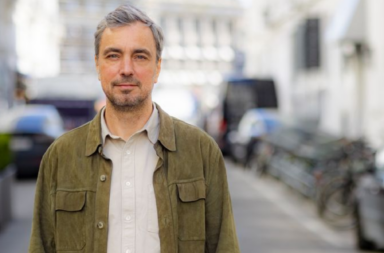
said campaign lead Alexander Tolstrup.
But more than two years later, there is still no solution, no clear answers, and no timeline. The working group expected to present its findings in 2025 has still not delivered. Meanwhile, the Tax Agency continues its audits and demands for repayment, and in several cases involving software development, the National Tax Tribunal, Landsskatteretten, has overturned the agency’s assessments, without it leading to changes in practice.
“The worst part is almost that even when companies win against the Danish Tax Agency, they may have lost several years of development along the way,”
said Esben Gadsbøll, chairman of Danske Tech Startups.
He points to the case of Eikonice, where Jørgen Bødkers lost many years of scaling the business.
“We won the case. But we lost four years in which SKAT effectively made it impossible for us to develop our company,”
said Jørgen Bødker, CEO of Eikonice.
One Paragraph Is Enough
The campaign proposes what it calls a simple, cheap, and effective solution: a new paragraph in the law defining what counts as innovation for startups, based on the OECD’s Oslo Manual. That would let founders plan, investments flow, and R&D stay in Denmark, while giving the Tax Agency the tool it needs to assess cases fairly.
The campaign calls on policymakers to act now in three steps: set a clear and binding timeline for clarifying the rules, stop the accrual of interest and create more proportionality and better repayment options in ongoing cases where companies have acted in good faith, and create a legal basis that recognises genuine, innovative software development.
To succeed, the campaign calls on the startup community to stand together, sharing their own cases, or contacting campaign lead Alexander Tolstrup.
You can find the campaign here: https://faadetnufikset.dk/